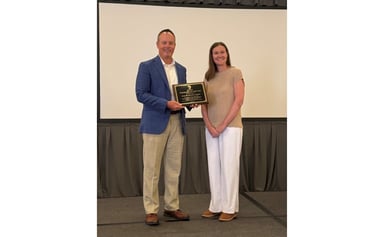
Jeremy is a member of the Professional Liability Department where he represents and defends attorneys, accountants, insurance producers, corporate directors and officers, and financial institutions, among other clients.
Jeremy handles various cases involving insurance agents and brokers liability. In connection with the same, Jeremy defends clients facing allegations of professional negligence, breach of fiduciary duty and breach of contract and routinely works with clients in an advisory capacity regarding best practices in consulting with insureds. In connection with handling insurance agents and brokers liability claims, Jeremy frequently publishes materials with the Professional Liability Underwriting Society (PLUS) through the PLUS Blog and offers various risk management tips through the PLUS podcast series.
Jeremy also represents clients in privacy and data breach matters and handles cases involving intellectual property, copyright and trademark infringement, as well as trade secret, trade dress technology and media-related litigation.
He is an active member of PLUS where he currently serves on the Board of Trustees. He is an alumnus of its Leadership and Mentoring Program (LAMP). Through PLUS, Jeremy achieved his Registered Professional Liability Underwriting (RPLU) Certification. He also serves on the PLUS Mid Atlantic Chapter Committee.
Jeremy graduated magna cum laude from Drexel University's LeBow College of Business. He earned his juris doctor from Rutgers University School of Law, graduating cum laude and in the top 15 percent of his class.
He is an active member of the New Jersey State, Camden County, and Burlington County Bar Associations. He is a frequent guest speaker at his alma mater, Rutgers University School of Law and at Drexel University’s LeBow College of Business, on topics including professionalism and career development. He is also active in the Knights of Columbus organization in his community.
Jeremy is admitted to the bars of the states of New Jersey and Pennsylvania and is admitted to practice in federal court in both the District of New Jersey and the Eastern District of Pennsylvania.
Results
Thought Leadership
Legal Updates for Lawyers' Professional Liability
Appellate Division Affirms Dismissal of Legal Malpractice Counterclaim Against Martin Law Firm
July 29, 2026
In Martin v. Loury, 2026 N.J. Super. Unpub. LEXIS 1617 (App. Div. July 15, 2026), Martin Law Firm represented Kirk Loury in an employment matter Mr. Loury filed against his former employer, Concord Equity Group Advisors LLC (“Concord”). The allegations included, among other things, that Loury was not fairly compensated for his employment with Concord. After a bench trial finding in Loury’s favor, the Appellate Division remanded this matter in February 2016 for a second trial. During the second trial, Concord CEO, Lee Argush, testified to lower compensation estimate than first trial. On remand, the second trial judge awarded Mr. Loury the same damages as the first judge, finding Mr. Argush not credible. After the findings during the second trial, Martin Law Firm filed an action against Mr. Loury to recover legal fees and costs of representing Mr. Loury in a second bench trial and Mr. Loury filed a counterclaim against Martin Law Firm for legal malpractice, alleging he should have received an even higher award in the second bench trial. In this allegation, Mr. Loury, through his expert, claimed that Martin Law Firm should have recalled Mr. Loury to the stand to rebut Mr. Argush’s testimony to allege an alternative theory of damages. Mr. Loury’s expert admitted that the second judge already rejected Mr. Argush's theory and accepted Loury's damages theory. The trial court barred Mr. Loury’s expert and dismissed Loury's counterclaim with prejudice before convening the collection trial, and the jury ruled in Martin Law Firm’s favor. Mr. Loury appealed the trial court's pretrial rulings barring his liability expert from testifying in support of his legal malpractice counterclaim, denying his motion for summary judgment on that counterclaim, and denying his motion to amend his counterclaim by adding attorney Joseph A. Martin as a codefendant. In affirming the trial court’s decision, the Appellate Division held that the trial court properly excluded Loury’s expert testimony in the counterclaim against Martin Law Firm because the expert could not explain how calling Loury as a rebuttal witness would have increased damages when the second judge already rejected Mr. Argush's testimony and accepted Loury's damages theory, making the expert’s causation opinion speculative. The Appellate Division also held that the trial court properly denied Mr. Loury's summary judgment motion on his malpractice counterclaim because reasonable minds could differ on whether Mr. Martin's alleged failures would have changed the second judge's damages award, given the judge already found Mr. Argush not credible, creating genuine factual disputes precluding summary judgment. Also, the Appellate Division held that the trial court properly denied Loury's May 2023 motion to add Joseph Martin individually because the statute of limitations expired in February 2022, six years after the 2016 appellate remand when Mr. Loury incurred new legal costs, and relation back did not apply because Mr. Loury knew Mr. Martin's identity throughout and strategically chose to sue only Martin Law Firm in his 2019 counterclaim.
Legal Updates for Lawyers' Professional Liability
New Jersey Appellate Division Affirms Exclusion of Legal Malpractice Expert as Impermissible Net Opinion
July 23, 2026
Jack Slimm and Jeremy Zacharias obtained a favorable decision on behalf of their client in a case centering on the admissibility of expert testimony in legal malpractice actions. In Martin v. Loury, the New Jersey Appellate Division affirmed the exclusion of a plaintiff's legal malpractice expert, holding that the expert's opinions on causation and damages were too speculative to support the malpractice claim. The legal malpractice action arose from an underlying employment dispute involving claims for damages stemming from the breach of an employment agreement. The plaintiff alleged that defense counsel committed malpractice during a second trial by failing to recall the plaintiff as a rebuttal witness after the employer's CEO testified. According to the plaintiff's expert, additional rebuttal testimony would have bolstered the plaintiff's damages claims and led to a more favorable result. Both the trial court and the Appellate Division rejected that theory. The courts found that the expert could not explain how the proposed rebuttal testimony would have altered the outcome of the underlying case or resulted in any additional recoverable damages. Notably, the trial judge in the underlying employment matter had already rejected the CEO's testimony as not credible and had accepted the damages analysis advanced by the plaintiff. The court had also determined that the amount of damages was not genuinely disputed. As a result, the expert's opinion that additional rebuttal testimony would have produced a better outcome was unsupported by the record and based on speculation rather than evidence. The Appellate Division agreed that neither the plaintiff nor the expert could identify any actual damages attributable to the alleged malpractice or demonstrate the required element of proximate causation. The court further upheld the trial court's application of New Jersey's net opinion doctrine, finding that the expert failed to provide the necessary "why and wherefore" supporting his conclusion that the attorney's conduct caused a compensable loss. Because the opinions rested on unquantified possibilities rather than demonstrable facts, they were inadmissible. Key Takeaway for Legal Malpractice Defendants For attorneys and firms defending legal malpractice claims, Martin v. Loury underscores the importance of closely scrutinizing an opponent's expert report on the critical elements of proximate causation and damages. The decision demonstrates that a malpractice claim cannot survive where an expert merely speculates that different litigation tactics might have produced a better result. Instead, the plaintiff must present admissible expert testimony grounded in the record that explains how the alleged attorney error probably changed the outcome of the underlying matter and resulted in measurable damages.